
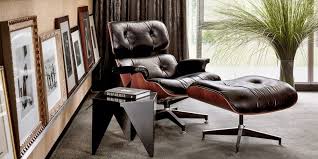
Written by the Decomica Design Team — updated June 2026. This article explains the intellectual property status of the Eames Lounge Chair design in EU jurisdictions and what that means if you are considering buying a replica.
The Eames Lounge Chair design is protected under copyright and design-right law in many jurisdictions, but the practical legal position for buyers and retailers varies significantly across the EU. In several EU member states, the design-protection term has expired or never fully applied to three-dimensional applied art, making quality replica sales lawful in those markets. In others, extended copyright terms remain active. Buying a replica for personal use is almost never unlawful; selling one is where the legal complexity lies.
This article covers the actual legal landscape — including the 2016 EU directive that extended design protection in the UK and certain EU states, why Decomica frames its products as replicas rather than originals, and what you should know before purchasing.
Who Owns the Eames Lounge Chair Design Rights?
Charles and Ray Eames designed the Lounge Chair (model 670) and Ottoman (671) in 1956 for Herman Miller, a Michigan-based furniture manufacturer. Herman Miller holds the manufacturing rights for the US market; Vitra AG, a Swiss company, holds the European licence and manufactures the authorised version for sale in Europe.
The Eames name itself is a trademark. Both Herman Miller and Vitra actively defend it. This means any product sold as an “Eames Chair” without authorisation from either company is potentially a trademark infringement — separate from the question of copyright in the chair’s design.
Decomica sells products described as replicas inspired by the Eames Lounge Chair design. Our products are not manufactured by, approved by, or associated with Herman Miller, Vitra, or the Eames Office.
The EU Copyright and Design-Right Position
EU law on furniture design protection changed materially in 2016. The 2016/943 EU directive and associated national implementations extended design protection for applied art (which includes furniture) to the life of the author plus 70 years in several EU member states. For Charles Eames, who died in 1978, this would in principle extend protection to 2048.
However, the practical picture is more nuanced for three reasons:
- Pre-existing markets. Before the 2016 directive, many EU member states had much shorter design-protection terms (typically 25 years from first marketing). Replica businesses that had traded lawfully under the old rules were, in many countries, given transitional periods rather than immediate prohibition.
- Registered vs. unregistered designs. The three-dimensional chair form has different protection depending on whether it was registered under the Community Design Regulation (CDR). Registered Community Designs last up to 25 years; unregistered protection lasts only 3 years from first disclosure.
- Jurisdiction variation. Denmark, the Netherlands, Belgium and several other EU member states had — and some retain — lower thresholds of originality required for copyright protection of functional objects. Court outcomes have differed significantly between German, Dutch and Danish courts for similar products.
What the Law Actually Says About Buying a Replica
The key distinction in almost all EU and UK case law is between commercial supply and private possession:
| Activity | Legal position (general EU) |
|---|---|
| Purchasing a replica for personal home use | Lawful in virtually all EU jurisdictions |
| Owning replica chairs in a commercial premises (restaurant, hotel) without selling them | Generally lawful; case law supports this in most EU countries |
| Selling replicas described as originals or using the Eames trademark | Unlawful — trademark infringement regardless of design protection status |
| Selling replicas clearly labelled as reproductions, in markets where design protection has expired or does not apply | Depends on specific jurisdiction and whether protection term has expired |
Decomica operates transparently as a replica retailer. We do not use the trademarked “Eames” name in product titles or claim any association with Herman Miller or Vitra. Our customers buy with full knowledge they are purchasing a quality reproduction of the 1956 design.
Why Do Replicas Exist at All?
The answer is partly economic and partly philosophical. Charles Eames himself articulated a belief in democratic design — good furniture for as many people as possible, not just wealthy patrons. The original chair now retails at €5,000–7,000+ from Vitra in Europe. For most households, that is simply not accessible.
Quality replicas sit at €700–1,400 — still a considered purchase, but within reach of a broader market. The engineering — moulded 7-ply plywood shells, rubber shock mounts, die-cast aluminium base, full-grain aniline leather — is reproducible by skilled manufacturers. What replicas cannot offer is the provenance of the original, the Herman Miller or Vitra brand guarantee, or the collector’s value that an original accumulates over time.
Whether that trade-off is acceptable is a decision each buyer makes individually. Decomica’s position is that a well-made, honestly-described replica is a legitimate product. We are transparent about what we sell.
What to Look for in an Honest Replica Seller
Not all replica sellers operate with the same transparency. Signs that a seller is behaving responsibly:
- Does not use the trademarked Eames, Herman Miller or Vitra names in product listings without a clear “replica” or “inspired by” qualifier.
- Provides accurate material specifications (leather grade, veneer species, base material).
- Offers a genuine warranty — Decomica provides a 2-year manufacturer’s warranty.
- Has verifiable customer reviews on independent platforms such as Trustpilot or Judge.me.
- Has a clear returns policy — Decomica offers a 14-day return window from receipt.
Sellers who describe their products as “authentic Eames” or use Herman Miller imagery without authorisation are operating differently — and buyers should be cautious about those representations more broadly.
Decomica’s Eames-Inspired Lounge Chair Collection
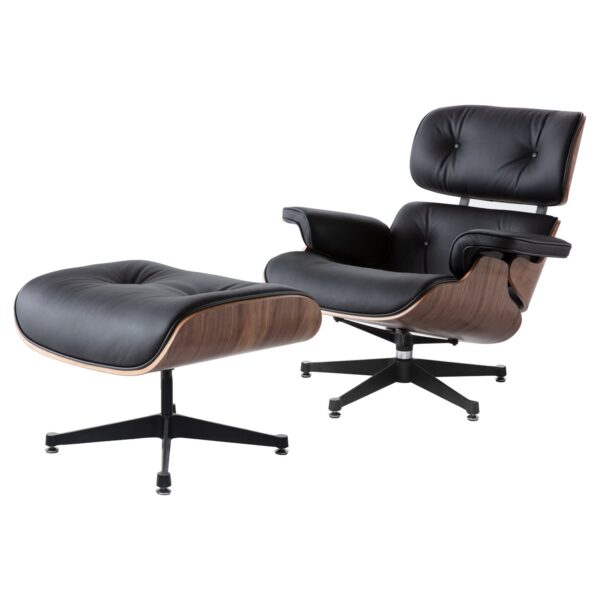
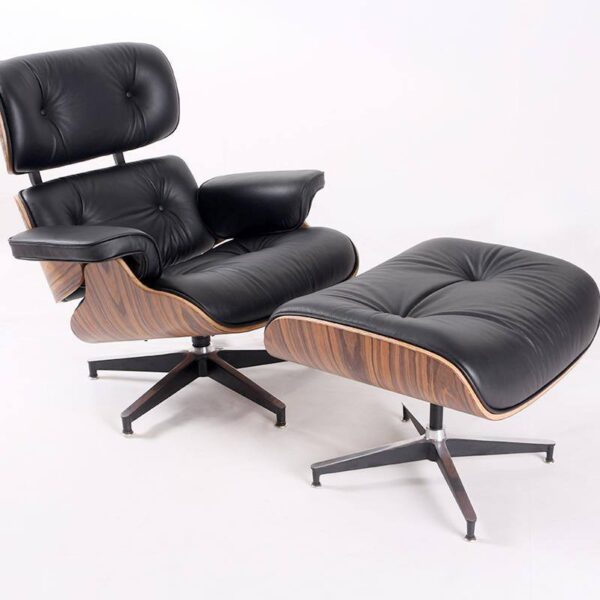
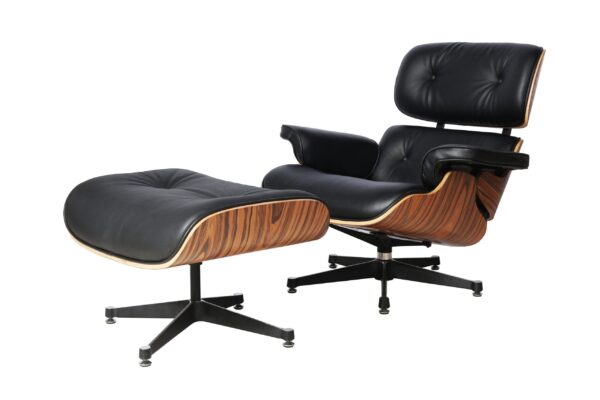
All products in the Decomica Eames Lounge Chair collection are described accurately as replicas or reproductions inspired by the 1956 design. They are not manufactured by or associated with Herman Miller or Vitra. For a detailed quality comparison, see our expert guide to the best Eames Lounge Chair replicas.
Frequently Asked Questions
Is it legal to buy an Eames Lounge Chair replica in the EU?
Purchasing a replica for personal or domestic use is lawful in all EU member states. The legal complexity applies to commercial manufacture and sale, not to the end buyer. You will not face any legal consequences for purchasing a replica chair for your home.
Can a restaurant or hotel legally use replica Eames chairs?
In most EU jurisdictions, owning replica furniture for commercial use without selling it is lawful. A restaurant using replica Eames chairs for seating customers — without selling them — is not typically in breach of design-protection law. Legal advice specific to your country is always recommended for commercial-scale use.
Will the Eames design eventually enter the public domain in the EU?
Under current EU law (life + 70 years), full copyright protection would run until 2048 (Charles Eames died in 1978). However, the practical market situation — including transitional provisions, jurisdiction variations and registered vs. unregistered design-right distinctions — means the picture is more complex than that single date implies.
Does Decomica have any connection to Herman Miller or Vitra?
No. Decomica has no affiliation with Herman Miller, Vitra, or the Eames Office. Our products are independently manufactured reproductions. We are transparent about this on every product page and in every customer interaction.
