
Written by the Decomica Design Team — updated June 2026. We source and sell quality Eames Lounge Chair reproductions across the EU, which means we have spent a lot of time understanding exactly what drives the original’s price.
Direct answer: The Eames Lounge Chair costs between €5,000 and €7,000+ new because of licensing exclusivity, hand-finished moulded plywood, top-grain leather, die-cast aluminium components, and the brand premium attached to the Herman Miller and Vitra names. A quality reproduction can replicate the materials and comfort for €600–€1,500. Here is what you are actually paying for at each price point.
The Eames Lounge Chair: A Brief History of the Price
Charles and Ray Eames designed the Lounge Chair and Ottoman in 1956, originally as a gift for their friend the film director Billy Wilder. The brief, as Charles described it, was a chair with the warm, receptive look of a well-worn baseball glove — something that felt genuinely luxurious without being stiff or formal.
Herman Miller has manufactured the chair under licence since its introduction. Vitra holds the European licence. Neither company sub-licences. That exclusivity is the first and most important factor in the price: there is no authorised low-cost version. Every chair bearing the Herman Miller or Vitra name is made to the same specification, with the same materials, in the same controlled manufacturing environment. Volume does not drive the price down because the production process is deliberately artisanal.
When you buy a licensed original today, you are paying for the provenance and the guarantee that the chair was made exactly as the Eames estate intended. That is a real thing. It is also a luxury that the vast majority of buyers do not need.
Breaking Down the Cost: What You Are Actually Paying For
1. Licensing and Brand Premium
A significant portion of the retail price of an original Herman Miller or Vitra chair is a brand and licensing premium. Herman Miller is a publicly traded company with a retail distribution network, flagship showrooms, and a marketing operation. Vitra maintains design museums and runs an internationally recognised design brand. These are not small operations, and their costs are embedded in the price of every chair.
Independent estimates suggest the licensing and brand premium accounts for roughly 30–40% of the final retail price. You are not paying that for the materials. You are paying it for the right to say your chair was made by Herman Miller, for the resale value that comes with that provenance, and for the after-sales support of an established retailer.
2. Hand-Finished Moulded Plywood Shells
The Eames chair’s shells are made from seven layers of plywood, each layer individually applied and moulded under heat and pressure into the compound curves that give the chair its shape. This is not a process that lends itself to full automation. Each shell requires skilled hand-finishing to achieve the smooth, consistent surface and the precise compound curve that makes the chair ergonomically correct.
The veneer — typically walnut, cherry, or santos palisander — is applied to both faces of the shell and finished to a high standard. Matching the grain across paired shells (seat and back, left and right arm panels) requires skilled selection and cutting. This is slow, skilled labour, and it costs accordingly.
3. Top-Grain Leather Cushions
The original chair uses top-grain aniline leather for the cushions. Aniline leather is tanned using soluble dyes without a surface pigment coat, which preserves the natural grain and texture of the hide. It is soft, breathable, and ages beautifully — developing a patina over years of use rather than cracking or peeling. It is also significantly more expensive to source and work with than pigmented leather or PU leatherette.
The cushions themselves are filled with high-density foam and carefully profiled to match the shell contours. The combination of aniline leather and precise cushion construction is a material cost that has no shortcut.
4. Die-Cast Aluminium Base
The five-star swivel base is die-cast aluminium, not pressed or spun steel. Die-casting involves forcing molten aluminium into a precision mould under high pressure, producing a component with consistent wall thickness, dimensional accuracy, and a clean surface finish. It is the correct process for a structural component that needs to be both strong and visually refined. It is also more expensive than the stamped or welded steel alternatives used in cheaper versions.
5. Rubber Shock Mounts and Assembly Precision
Between the plywood shells and the aluminium frame sit rubber shock mounts — small but significant components that allow the shells to flex with the sitter’s movements. This is a detail that most budget replicas omit entirely, and its absence noticeably affects both comfort and long-term durability. Installing them correctly requires a degree of assembly precision that adds time and cost.
6. Quality Control and Warranty
Herman Miller and Vitra both back their chairs with meaningful warranties and have the infrastructure to honour them. Herman Miller’s warranty on the Eames Lounge Chair is 12 years. That warranty is priced into the chair. You are also paying for the confidence that the chair passed rigorous quality checks before it left the factory.
The Price Breakdown at a Glance
| Cost driver | Approximate contribution to retail price |
|---|---|
| Licensing and brand premium | 30–40% |
| Moulded plywood shells, hand-finished | 20–25% |
| Top-grain aniline leather cushions | 15–20% |
| Die-cast aluminium base | 10–15% |
| Assembly, QC, warranty provision | 10–15% |
So Where Does That Leave Replicas?
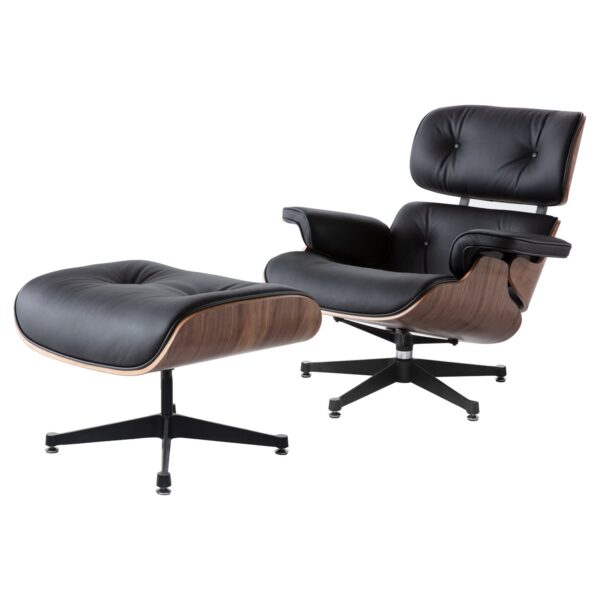
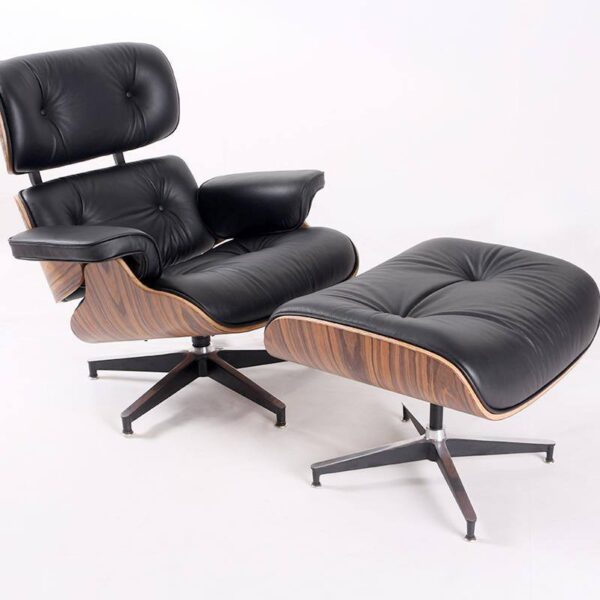
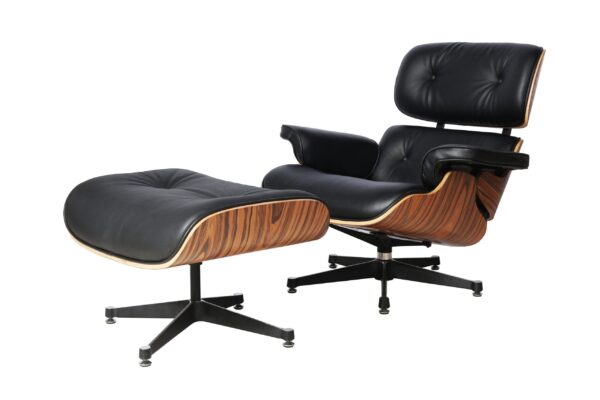
A quality reproduction can replicate the materials — moulded plywood shells, genuine leather, die-cast aluminium base, rubber shock mounts — without the licensing premium, the brand infrastructure, or the showroom retail markup. That is why a well-specified replica costs €600–€1,500 rather than €6,000+.
What you lose in a quality replica is provenance. The chair was not made by Herman Miller. Its resale value will be negligible. It will not come with a 12-year warranty. If you are buying for investment, for a design collection, or because the Herman Miller name is meaningful to you, a replica is not a substitute.
If you are buying for your living room and want the aesthetic and comfort of the Eames design without a five-figure outlay, a well-made replica is a rational choice — provided you buy from a seller who is transparent about what they are selling and backs it with a real warranty.
What to Look for in a Quality Eames Lounge Chair Reproduction
Not all replicas replicate the right things. Here is what the material spec of a quality reproduction should include:
- Shell: 7-layer moulded plywood, veneered on both sides in walnut, palisander, or ash
- Upholstery: Genuine leather (full-grain or semi-aniline), not PU leatherette
- Cushion fill: High-resilience foam, not low-density foam that compresses rapidly
- Base: Die-cast aluminium, five-star swivel, with smooth 360-degree rotation
- Shock mounts: Rubber mounts between shell and frame (often listed as a feature; if not mentioned, ask)
- Warranty: Minimum 2 years, covering manufacturing defects
Decomica’s Eames Lounge Chair reproductions meet all of these specifications. Pricing starts from €779 (VAT included), with free EU-wide delivery (excluding Bulgaria, Greece, Cyprus, and Malta). Orders are dispatched within 1–2 working days and delivered within 5–7 working days from dispatch. All chairs carry a 2-year manufacturer’s warranty. Defect returns are collected free by DPD; change-of-mind returns within 14 days require the customer to cover return shipping of approximately €40–50.
Browse the full range at the Eames Lounge Chair collection, or contact us at support@decomica.com with any questions.
Frequently Asked Questions
Why does the Eames Lounge Chair cost so much more than other lounge chairs?
The combination of hand-finished moulded plywood shells, top-grain aniline leather, die-cast aluminium components, and the Herman Miller or Vitra brand premium places the original well above the price of a standard lounge chair. Most lounge chairs in the €500–€1,500 range use foam padding, fabric, and steel frames. The Eames design uses none of those materials.
Has the price of the Eames Lounge Chair increased over time?
Yes. The licensed original has increased in price consistently over the decades, broadly in line with premium furniture price inflation and the increasing strength of the Herman Miller and Vitra brands. Vintage originals from the 1960s and 1970s in good condition can command prices comparable to or exceeding new originals.
Is a second-hand original Eames chair worth buying?
It can be, if you can verify authenticity and the condition of the leather and plywood. Worn leather can be reupholstered by specialists. Cracked plywood shells are more difficult and expensive to address. Buy from a reputable source and inspect carefully. Herman Miller’s customer service team can sometimes help verify authenticity from serial numbers and manufacturing marks.
What is the difference in comfort between an original and a quality replica?
For most sitters in everyday use, the difference is smaller than the price gap suggests. The moulded plywood shell geometry, recline angle, and cushion construction are all replicable. The main comfort-related difference is in leather quality: aniline leather breathes and conforms to the body over time in a way that PU leatherette does not. A replica with genuine leather closes most of that gap.